Baaaack Home Again
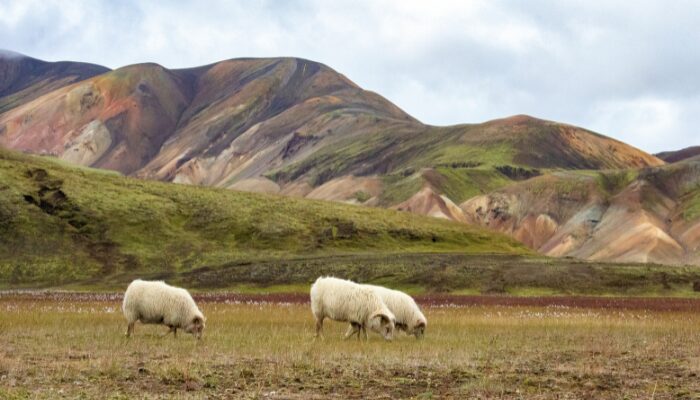
Two years ago, Parky and I joined my sister Elaine and her husband on a vacation to Iceland. It was fabulous, with the natural beauty of Iceland’s tundras, roadside glaciers, 100-year-old moss-covered lava fields, spectacular waterfalls, and snow-capped mountains surrounding us.
We had an interesting encounter while traveling to one of our destinations when we saw hundreds of sheep being corralled into a funny-looking pen. An Icelander told us that it was the time of year when all of the sheep were brought from the highlands down to the lowlands. They were placed in the pen for the perspective owners to claim.
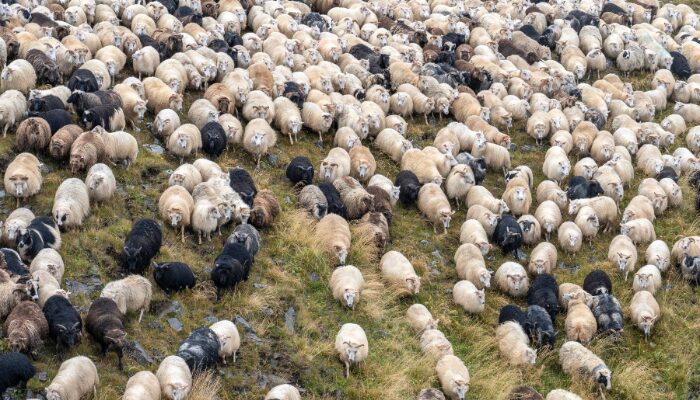
I never heard of such a thing! Turns out, it is a BIG deal. The rettir, as it is called, is a timeless Icelandic tradition that occurs in three parts: the mountain trip, the journey back down to a central location, and sorting. The onset of fall in September marks the roundup of sheep that have spent the summer months roaming the mountains and valleys of the Highlands.
The Background of Why and How
Lambs are typically born in the spring and early summer. Farmers release the lambs and their mothers into the mountains, allowing them to roam. Free roaming benefits both the farmer and the sheep. The sheep enjoy the tasty mountain grass, which makes them plumper, and the farmers have time to tend their land for harvest. Of course, reduced feeding costs are a significant plus. With roaming, the sheep’s meat is considered to be more flavorful.
This reminds me of free-range chicken farms, which allow for a more natural diet leading to healthier eggs. Same here but with sheep . . . well, sort of.
Farmers are given the legal right to graze their sheep on communal land if desired. Each region has its own section of the Highlands. However, if a farmer exercises his right, he must provide someone to go into the Highlands to retrieve his sheep.
The Process
The process involves a group of people traveling on foot, often accompanied by sheepdogs, Icelandic horses, and ATVs. A Mountain King or Queen, who has been awarded the honorary position, guides the group. This person is familiar with the lay of the land. Their leadership is earned and not to be questioned.
The gathering of sheep can take from several days up to more than a week. Herders sleep in mountain huts, cross rivers, and tackle the unpredictable weather Iceland is known for. The sheep are located, sometimes by the horses. Smaller bands merge into larger ones as they are herded down to the lowlands. While en route, it is common for them to create brief traffic jams.
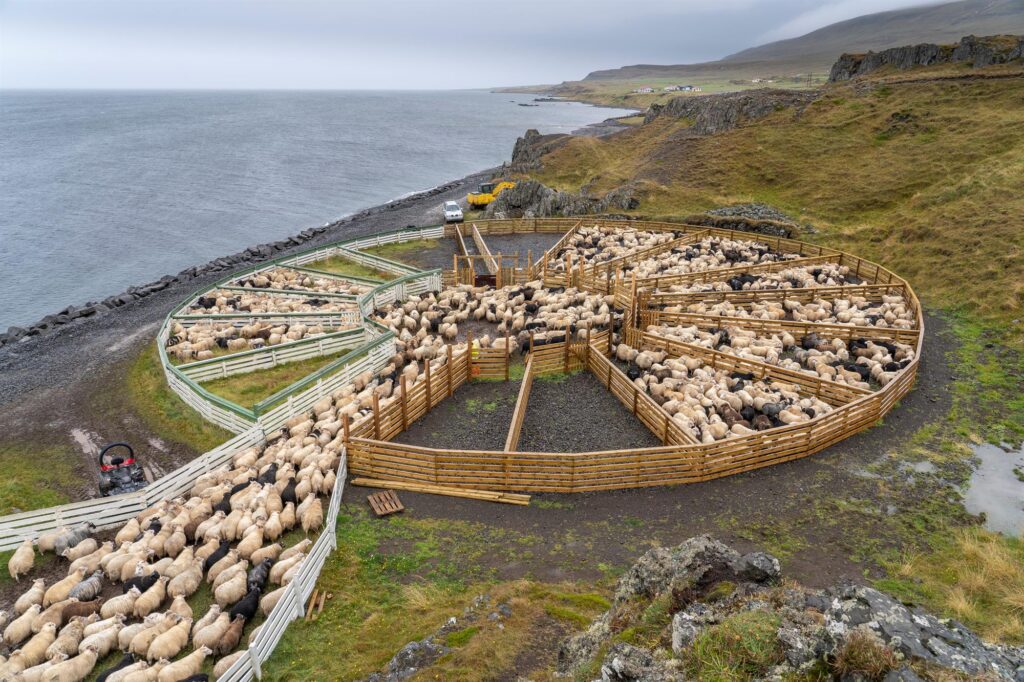
The sheep are led into a county pen, which is what Parky and I witnessed. I was fascinated that the sheep were a mixture from farms across the area. I wondered how the sheep would be accurately reclaimed.
Here is how it works: the sheep are herded into the central pen. Imagine a circle in the middle of a pie, where the gooiest part is. From here, farmers and community members work together to sort the sheep into respective sections by grabbing their horns and guiding them through a gate door. The outer pens radiate from the central pen like a piece of pie.
Sorting is based upon unique ear markings and tags, although many farmers just know their sheep. In order to assist, one must have knowledge of the markings, identification tags, and farm names to allow for accurate sorting. Although the process is chaotic, noisy, and muddy, it is joyful. Tourists can participate by referring to the farmers’ journal list of where rettirs will take place.
A celebration follows the rettir. Food, drink, and singing are part of the celebration. Meat soup is eaten among friends as entire communities come together. Farmers use the opportunity to catch up with other farmers; it is also a time for younger generations to learn and be part of the longstanding tradition.
Once the sorting is done, the sheep are taken home. Farmers and their families love to reunite with their sheep. That’s why this is considered to be a favorite day by Icelanders.
The tradition has cultural significance and is considered to be a symbol of resilience and cooperation. The rettir reflects the deep connection between the people, their culture, and their land. Although it has evolved over the years, the core values remain the same.
What is the lesson from the sheep here? Be known, marked, and tagged for the One to whom you belong. As Christians, we belong to the Good Shepherd. Are you easily identified as belonging to Him?
I am the good shepherd. I know My own sheep, and they know Me (John 10:14).

Follow This Blog
Ewe R Blessed Ministries / Karen O. Allen